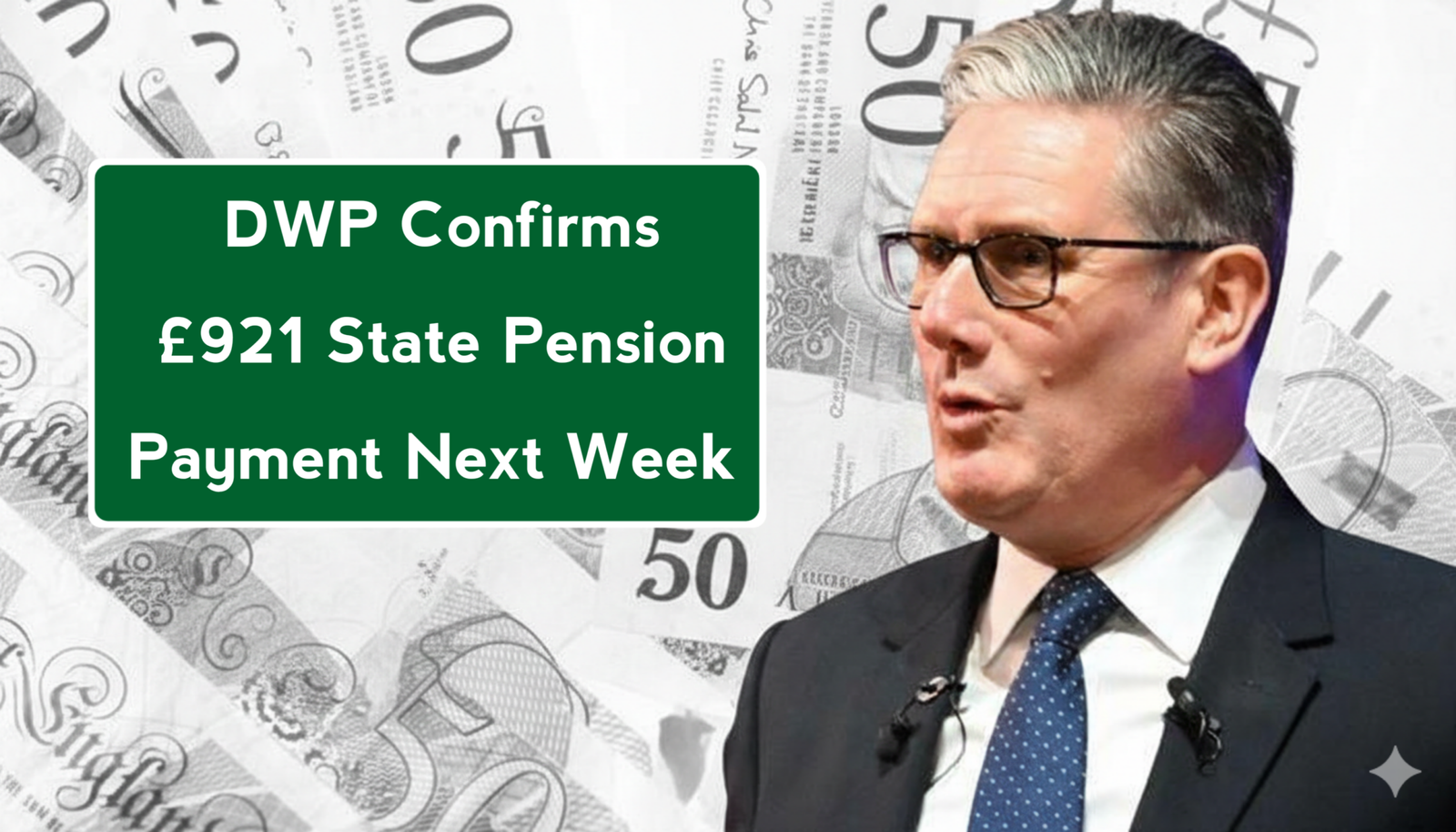
The Department for Work and Pensions (DWP) has confirmed that a £921 State Pension payment will be made to eligible pensioners across the UK next week, offering timely financial relief as household costs remain high. This update has attracted widespread attention, especially among retirees who rely heavily on their State Pension to manage daily expenses such as energy bills, food, rent, and healthcare.
While not every pensioner will receive exactly £921, the DWP has clarified that this figure reflects combined or specific payment schedules, including arrears, backdated amounts, or enhanced entitlements. Understanding who qualifies and how the payment works is essential to avoid confusion and missed expectations.
This article explains everything UK pensioners need to know in clear, simple language.
What the £921 State Pension payment means
The £921 payment is not a brand-new bonus or one-off grant, but rather a scheduled or accumulated payment under the State Pension system. For many recipients, this amount represents several weeks of pension paid together, often due to administrative timing, bank holidays, or individual payment cycles.
In some cases, the figure may also include arrears, especially for pensioners whose claims were processed late or recently updated. The DWP regularly adjusts payments when a claimant’s circumstances change, and any owed money is paid automatically.
Why the payment is being issued next week
State Pension payments are normally issued every four weeks, directly into the recipient’s bank or building society account. However, payment dates can vary depending on:
- The claimant’s National Insurance number
- Bank holiday schedules
- Recent changes to pension entitlement
- Backdated claims being settled
For those affected, next week’s payment will appear as a single lump sum, which in some cases totals £921.
Who may be eligible for the £921 payment
Eligibility depends on individual circumstances, not a universal rule. You may receive this payment if you fall into one or more of the following categories.
New State Pension claimants
People who have recently reached State Pension age and successfully submitted a claim may receive a backdated payment covering the period between eligibility and claim approval. When added together, these weeks can result in a larger-than-usual payment.
Pensioners with payment adjustments
If the DWP has corrected an error, updated National Insurance records, or reassessed entitlement, any underpaid pension amounts are paid automatically. These adjustments often appear as a lump sum.
Couples receiving combined pension income
In households where both partners are eligible for State Pension and payments align in the same week, the combined total can reach around £921, depending on individual rates.
Pensioners affected by deferred payments
Some pensioners choose to delay claiming their State Pension, which increases weekly payments later. When payments restart, the initial amount may be higher due to accumulated entitlement.
How much State Pension people usually receive
To understand the £921 figure, it helps to know the standard rates.
As of the current tax year, the new full State Pension is paid at a weekly rate close to £220. Over a four-week cycle, this equals approximately £880 to £900, depending on exact entitlement.
Older pensioners on the basic State Pension may receive a slightly lower weekly amount, but additional elements such as pension credits or arrears can raise the total.
When the payment will arrive
For eligible recipients, the payment is expected to arrive next week, on the claimant’s normal payment day. State Pension payments are made directly into bank accounts, and there is no need to take any action.
If your payment is due, it should appear automatically with a reference similar to “DWP PENSION”.
What to do if you do not receive the payment
If you believe you are eligible but do not receive the payment, it is important not to panic. Delays can occur for several reasons, including banking processing times or recent account changes.
You should:
- Check your bank account carefully
- Review recent letters or messages from the DWP
- Allow at least one working day after the expected date
If the payment still does not arrive, you can contact the Pension Service for clarification.
Will everyone get £921?
No. The DWP has made it clear that £921 is not a fixed payment for all pensioners. The actual amount received depends on:
- Your weekly pension rate
- Whether you are owed back payments
- Your payment schedule
- Any recent entitlement changes
Many pensioners will receive less, while some may receive more, depending on their circumstances.
How this payment helps UK pensioners
With rising living costs, lump-sum payments can make a meaningful difference. Many pensioners use these funds to:
- Clear outstanding utility bills
- Cover winter energy costs
- Pay for essential home repairs
- Support healthcare or mobility needs
- Build a small financial buffer
For those on a fixed income, even temporary relief can ease financial pressure.
Impact on other benefits
Receiving a larger State Pension payment does not normally affect entitlement to other benefits such as:
- Attendance Allowance
- Personal Independence Payment
- Winter Fuel Payment
However, pensioners receiving means-tested benefits, such as Pension Credit, should be aware that large lump sums may temporarily affect assessments. In most cases, the DWP already accounts for this automatically.
Avoiding misinformation and scams
The DWP has warned pensioners to be cautious of scam messages or calls claiming to help “release” or “claim” the £921 payment. The department will never ask for personal or bank details by text or email.
All genuine payments are made automatically, and no application fee is required.
Final thoughts
The confirmed £921 State Pension payment next week highlights how the UK pension system sometimes issues larger combined payments, rather than regular weekly amounts. While not everyone will receive this exact figure, thousands of pensioners will see a welcome boost in their accounts.
If you are eligible, the payment will arrive without any action needed. Staying informed and understanding how the system works can help pensioners plan better and avoid unnecessary worry.
For many households, this payment comes at the right time, offering reassurance and a bit of breathing space during challenging economic conditions.